
Case Study - Residential Building (B'lore North)

OBSERVATION:

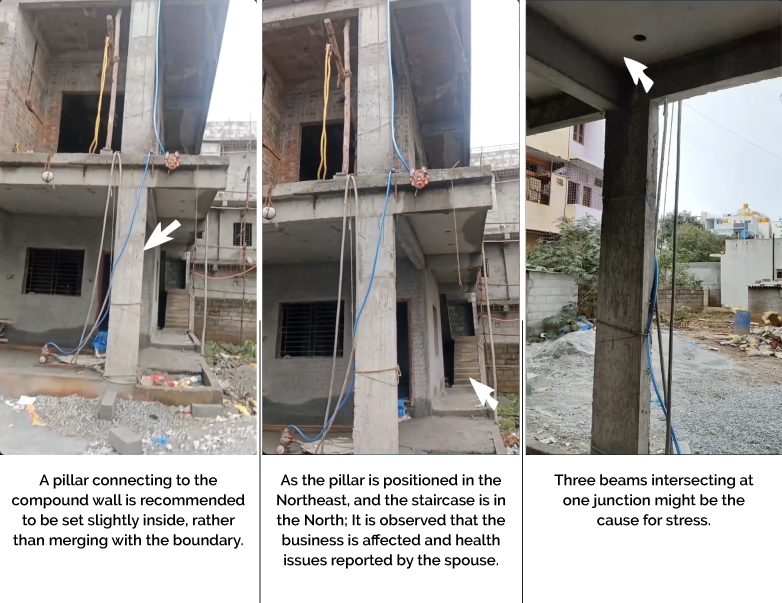
The main entrance of the house is toward the East, which is considered auspicious, as it allows for the inflow of morning sunlight and energy. However, it is important to note that the staircase has been constructed in the North. The placement of staircases and entrances plays a crucial role in determining the overall energy dynamics within the residential building.

ISSUES IDENTIFIED:

  • Disrupted Energy Flow: The natural and optimal flow of energy in a house generally moves from the Northeast (NE) to the Southwest (SW), both along straight and diagonal lines. Any obstruction or misalignment along this path can interfere with the harmonious movement of energy, potentially leading to a buildup of negative influences in certain areas.
  • Pillar Connection to Compound Wall: There is a structural pillar that is directly attached to the compound wall, rather than being positioned slightly inside the boundary. This can act as a blockage, adversely affecting the free movement of energy throughout the property.
  • Impact on Health and Business: The pillar in the Northeast, and the staircase in the North, have been the consequences, specifically, the family experiencing business closures and health issues affecting the spouse.
  • Multiple Beam Junction: Another concern is that three beams are converging at a single junction, which can create a point of excessive structural and energetic stress, compounding the negative effects present.

RECOMMENDATION:

To help mitigate these issues and restore a more balanced energy flow within the residence, it is recommended to install a centralized rod adjacent to the staircase and directly below the problematic pillar. This structural adjustment is intended to redirect and harmonize the energy movement. Additionally, considering repositioning the pillar slightly inside the compound rather than allowing it to merge with the boundary wall may further enhance the energy environment of the home.

September 2025